My Cat - Virtual pet simulator
- 4.3
- Rating
- 50.00M
- Installs
- Free
- Price

 Analysis by App-foxy
My first impression of My Cat was that it understands the appeal of a virtual pet without making the starting point feel intimidating. This is a free simulation game from Appsyoulove in which I look after a kitten, interact with it through augmented reality, and spend time with small games built around the pet. The idea is simple, but the important question is whether that simplicity remains enjoyable after the first few sessions.
After using it as a casual companion rather than treating it like a game I had to master, I found a pleasant rhythm. I could check in briefly, give the kitten attention, and then leave without feeling that I had missed a complicated event. That makes it easy to recommend to someone who wants a friendly digital pet rather than a demanding management simulator. At the same time, the experience depends heavily on whether you enjoy repeating small care routines. If you are looking for deep progression, a large story, or a competitive challenge, this is probably not the right place to spend your time.
What the first week feels like
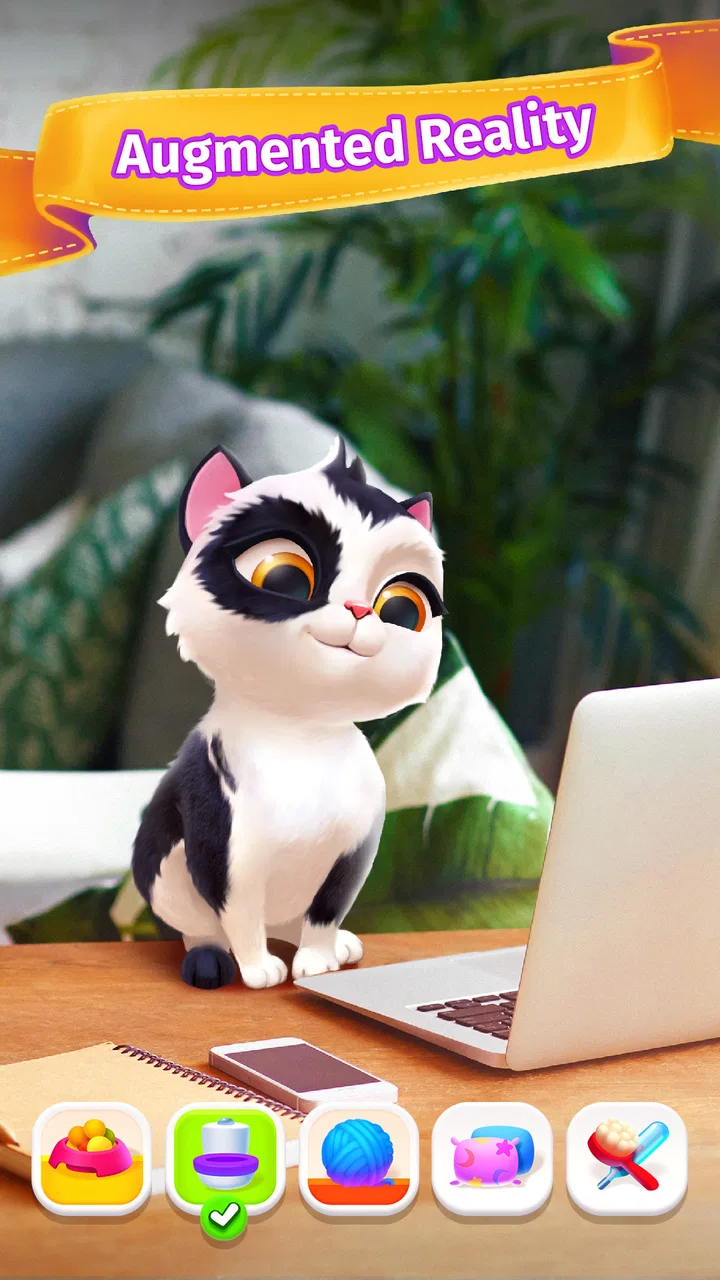
The opening appeal comes from the kitten itself. A virtual animal creates an immediate emotional hook, especially when the interaction is presented through AR rather than only inside a conventional game screen. Placing the cat into a real-world setting gives the experience a more personal feel: the pet seems connected to the room where I am using it, even though the underlying activity remains light and playful.
You May Also Like

 Blood Strike: 2.5 Anniversary
Blood Strike’s Loadouts Turn Every Drop Into a Tactical Gamble
A close look at Blood Strike’s custom loadouts: how fast access to signature weapons reshapes its battle royale rhythm, rewards preparation, and narrows the gap between fights.

 Pandora - Music & Podcasts
Pandora’s Music Is Easy to Start, but Harder to Recover
Pandora’s strength is its low-effort path from a seed to a station. Its weak spot is how much confidence it asks you to place in connection, setup, and quiet recovery.

 8 Ball Pool
 Is Built on Rivalries, Rematches, and Routine
A close look at the rivalries, rematches, shared routines, and unanswered safety questions that turn a quick pool match into a persistent mobile community.

 Samsung Music
’s Quiet Strength Is Playing What You Already Own
Its reach comes less from spectacle than from dependable access to a personal library. That simplicity is both the app’s strongest retention engine and its ceiling.

 AccuWeather: Weather Radar
AccuWeather Review: A Quick, Clear Forecast for Everyday Decisions
For everyday plans, the best forecast is the one you can understand quickly. AccuWeather makes rain timing, radar, and local conditions easy to act on, with a few trade-offs.

 Hill Climb Racing
Why Hill Climb Racing Still Turns Crashes Into One More Run
A tiny car, a bumpy hill and one more upgrade: Hill Climb Racing keeps resurfacing because its simple chaos makes every near-miss feel personal.
More From Our News Desk



I think the AR element works best when I treat it as a short moment of interaction instead of expecting a full mixed-reality game. It is fun to bring the kitten into a familiar space, show it to someone nearby, or use the feature as a reason to pause for a minute. The novelty is strongest during the first few days, when simply seeing the pet appear in a different setting feels fresh. Later, AR becomes more of an optional way to make ordinary care feel less static.
The early routine is approachable because the game is built around looking after the cat and spending time with it. I never felt that I needed to study a complicated rule system before enjoying the basic loop. That accessibility also explains the Everyone content rating: the presentation is gentle and suitable for a broad audience, including younger players who want the feeling of caring for an animal without the real-world responsibility.
The mini-games help prevent the first week from becoming only a sequence of care actions. They give me something more active to do when I want to play rather than simply check on the kitten. Their role is modest, though. I see them as seasoning for the pet experience, not as a separate collection that would keep me engaged on its own for long sessions.
A realistic use case is a short break between tasks. I might open the game while waiting for a meeting, let the kitten occupy my attention for a few minutes, and close it before the break becomes a distraction. That works better than opening it during a period when I want a substantial gaming session. The design favors small visits, and recognizing that early makes the app feel more satisfying.
The game has been available since January 8, 2020, and its continued visibility is reflected in a 4.4 average from around 188 thousand ratings. Those figures do not automatically prove that it will suit everyone, but they do suggest that the basic virtual-pet formula has connected with a large audience. I can understand why: the premise is immediately clear, the tone is approachable, and there is no need to learn an elaborate fictional world before the kitten becomes the focus.
How the AR feature changes the routine
AR is not merely a visual extra in the first week because it changes how I think about the pet. A normal virtual pet stays inside its interface, while this kitten can be treated more like a visitor I bring into my surroundings. That small shift makes the game especially appealing for children, families, and anyone who enjoys taking screenshots or showing playful scenes to friends.
Still, I would not choose this game solely for AR. The feature adds charm, but it does not replace the need for a good daily loop. If the novelty of placing the cat around the room is the only thing that interests you, the experience may feel brief once you have tried several locations. The strongest reason to continue is the combination of that visual presence with the ongoing care routine.
One practical tip is to use AR selectively. I get more value from it when I save it for moments when I genuinely want to interact with the kitten, rather than activating it every time I open the game. That keeps the feature feeling like a small event instead of turning it into a repetitive step. For quick check-ins, the ordinary interface is usually more convenient.
Who will enjoy the opening hours
This is a good first virtual pet for someone who wants a soft introduction to simulation games. It avoids the pressure that can come with larger life simulators, where there may be inventories, schedules, currencies, maps, and long-term objectives competing for attention. Here, the kitten remains the center of the experience, which makes the first sessions easy to understand.
It is also a reasonable choice for people who like mobile games in short bursts. The free entry point removes an initial purchase decision, although optional in-app items range from $0.99 to $99.99 each. I would begin without buying anything and first decide whether the care loop itself has become part of my routine. A virtual pet only earns spending when I already enjoy returning to it; purchases should not be used to manufacture that interest.
What remains after the novelty fades
The more important test begins after the first week. Once the kitten is familiar and the AR surprise has softened, the game has to earn repeated visits through habit. In my experience, its lasting value comes from the gentle structure rather than from constant discovery. I can return, perform a few familiar actions, play briefly, and leave with the sense that I have maintained a small digital relationship.
That can be surprisingly effective for people who like routine. The game does not need to dominate a month of free time to be worthwhile. It can occupy the same mental space as checking a plant, opening a simple puzzle, or visiting a comfort app. The key is accepting that the reward is continuity: the pleasure comes from keeping the kitten part of the day, not from expecting a new revelation every time.
For month-to-month use, I would set a personal boundary around the length of each visit. If I expect a major new activity every session, the game may feel thin. If I use it as a compact ritual, it has a better chance of lasting. This is one of the less obvious trade-offs of the design: the same simplicity that makes it approachable can make it feel repetitive to players who need constant mechanical variety.
The mini-games have a useful role here because they offer a change of pace when care tasks begin to feel automatic. However, I would not describe them as enough to transform the game into a broad arcade package. Their value is contextual. They are most helpful when I want to interact with the kitten for a little longer, not when I am searching for a deep standalone challenge.
Compared with a traditional pet-care simulator, the AR presentation gives this game a more personal identity. Compared with a large life-simulation game, it is much narrower and easier to pick up. Compared with a pure arcade game, it offers more emotional continuity but less intensity. That makes the choice fairly clear: select this one when the pet relationship matters more than complex systems, and choose another category when goals, competition, or extensive customization are your main reasons for playing.
The maintenance burden is gentle, but still real
Virtual pets are often described as relaxing, yet their appeal depends on maintenance. I have to be willing to return even when I am not chasing a high score or completing a story chapter. That obligation is light here, but it is still an obligation in the psychological sense. The game asks me to care because the kitten is meant to feel like an ongoing companion, not a disposable level.
That makes the app a better fit for people who enjoy small responsibilities. Someone who likes checking in on a digital creature may find the routine comforting. Someone who tends to feel guilty about missing a game may experience the same routine as pressure. I would skip it if reminders or unfinished care tasks make mobile games stressful, because the central appeal is precisely the repeated act of looking after the pet.
A useful way to avoid fatigue is to separate “maintenance” from “play.” On a busy day, I can treat a short visit as enough rather than forcing myself to spend a long time in the app. On a quieter day, I can use the AR mode or mini-games to make the visit more active. This flexible approach protects the game from becoming another demanding item on a daily checklist.
The free model also deserves a careful look. Since the game costs nothing to start, it is easy to test the routine before committing. The presence of optional purchases means I would pay attention to my own behavior: if I begin opening the app mainly to unlock or accelerate things, I would pause and ask whether the kitten itself is still providing the enjoyment. The broad price range of individual purchases makes restraint especially sensible for families sharing a device or for younger players.
Why players may eventually feel tired
The main source of fatigue is repetition, not difficulty. A virtual kitten is inherently built around recurring care, so the actions that feel comforting at first can become predictable later. AR can delay that feeling, and mini-games can break it up, but neither changes the fundamental structure. Players who need frequent surprises may reach the limit of the experience sooner than players who enjoy ritual.
Another possible friction point is the gap between emotional expectation and mechanical depth. Seeing a kitten in a real setting can make me imagine a more elaborate pet simulation than the game actually needs to provide. If I expect a detailed animal personality, a large environment, or a rich progression system, the focused design may seem limited. The app works best when I judge it as a compact companion game rather than as a complete digital-life replacement.
There is also a practical attention trade-off with AR. It is more engaging when I have enough space and time to use it comfortably, while quick sessions may be better served by staying in the standard game view. That means the most distinctive feature is not always the most convenient feature. I would not call that a flaw, but it is worth knowing before making AR the main reason for downloading the game.
The app is currently at version 5.3.2.0 and requires Android 8.0 or later. For a person using an older device, that operating-system requirement matters before installing. For everyone else, the more important question is not compatibility but attention: do you want a game that asks for regular affection, or would you rather have a title with a clear ending and less repetition?
Small habits that improve the long-term experience
I found three habits particularly useful. First, I keep visits short on ordinary days and reserve longer sessions for when I actually want to play. This prevents care from feeling like a chore. Second, I use AR as an occasional change of setting instead of a compulsory part of every check-in. Third, I avoid treating every optional purchase as necessary; the free starting experience is the right place to test whether the routine has staying power.
A fourth useful approach is to connect the game to an existing pause in the day rather than opening it randomly. A commute break, a quiet moment after lunch, or the end of an evening can give the kitten a natural place in my schedule. That is more sustainable than trying to remember it constantly. The app benefits from consistency, but consistency is easier when it is attached to a habit I already have.
For parents, I would introduce the game as a shared activity at first, especially because the AR element is more enjoyable when someone else can see the kitten in the room. I would also establish a clear rule about purchases before handing over the device. The Everyone rating makes the tone broadly accessible, but age suitability does not remove the need for sensible spending boundaries.
For adults, the strongest use case is as a low-pressure decompression tool. It can provide a small emotional reset without demanding the concentration of a strategy game or the time commitment of a large simulation. The limitation is that it may not hold attention when I want meaningful progression. On those evenings, a deeper life simulator or a story-driven game would be a better choice.
Does My Cat earn lasting space?
My answer is yes, with an important qualification: it earns a small, regular place rather than a central one. The game is at its best when I want a friendly virtual pet that I can revisit in short sessions. The kitten, AR presentation, and mini-games work together to create a gentle routine that feels more personal than a basic idle app and less demanding than a full simulation.
It is not the right choice for someone who wants endless novelty, intricate systems, or a strong competitive layer. The first-week charm is real, but the month-to-month value depends on enjoying maintenance for its own sake. Once the surprise of seeing the kitten in different places fades, the repeated care loop has to be enough. For me, that makes the game calming rather than thrilling, and that distinction is central to whether it will stay installed.
With over 50 million installs, the game has clearly reached a substantial audience, and its free entry makes trying it straightforward. I would still approach the optional purchases carefully, especially because the per-item range reaches $99.99. Downloading it is easy to justify if you want to test a virtual-pet routine; spending should come later, only if the routine has genuinely become valuable.
Overall, Appsyoulove has made a focused simulation game that understands the appeal of a kitten without burying it beneath unnecessary complexity. I would recommend it to casual players, families, and anyone who enjoys small daily rituals with a playful AR twist. I would point dedicated gamers elsewhere if they need substantial progression or a game that keeps reinventing itself. Its lasting strength is not constant excitement, but the quiet habit of returning to a pet that feels like it belongs in your day.
FAQs for My Cat - Virtual pet simulator
01What is My Cat - Virtual Pet Simulator about?
My Cat - Virtual Pet Simulator is an interactive app where you can adopt, care for, and play with a virtual cat. The app offers a range of activities such as feeding, grooming, and playing mini-games. It’s designed to mimic the experience of having a real pet, providing entertainment and companionship for users of all ages.
02Is My Cat - Virtual Pet Simulator free to download and play?
Yes, My Cat - Virtual Pet Simulator is free to download and play. However, the app includes in-app purchases and ads. These purchases can enhance the gaming experience by providing additional features, items, or by removing ads. Users should be aware of this if they want a completely ad-free experience or special items for their virtual pet.
03What are the system requirements for the app?
My Cat - Virtual Pet Simulator requires iOS 10.0 or later for Apple devices and Android 5.0 and up for Android devices. It’s important to ensure your device has the necessary operating system version and enough storage space to accommodate the app, which frequently updates to enhance features and fix bugs.
04Can I interact with other players in My Cat - Virtual Pet Simulator?
While My Cat - Virtual Pet Simulator primarily focuses on the interaction between you and your virtual pet, certain features may allow you to connect with friends. These can include sharing achievements or visiting friends’ virtual cats, depending on the app's current version and features.
05What kind of mini-games are available in the app?
The app includes a variety of mini-games that help keep your virtual cat entertained and happy. These games range from simple puzzle games to more interactive activities like chasing toys. Each mini-game is designed to be fun and engaging, offering different rewards that can be used within the app to care for your cat.
Pros
- Engaging and interactive gameplay.
- Realistic cat behaviors and sounds.
- Wide variety of cat breeds to explore.
- Customizable environments and accessories.
- Encourages responsibility and care.
Cons
- In-app purchases can be pricey.
- Occasional ads interrupt gameplay.
- Requires internet for some features.
- Limited free content options.
- Battery consumption can be high.

My Cat - Virtual pet simulator
Gallery